


The Materials-Envi Lab (MEL) has recently been strengthened by two postdoctoral researchers and one senior scientist. They have joined VSB–Technical University of Ostrava from leading institutions including Eindhoven University of Technology, Kyoto University, and the Korea Advanced Institute of Science and Technology (KAIST).
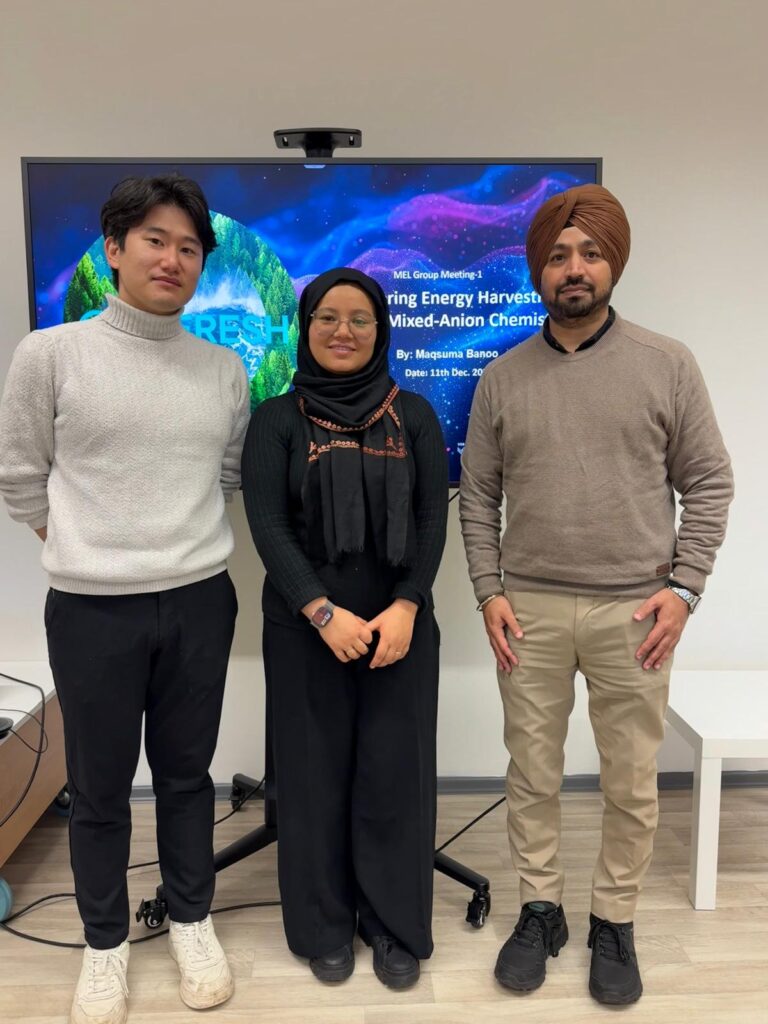
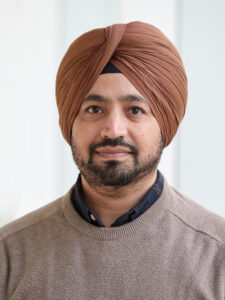
Simrjit Singh, who has taken up the position of Senior Scientist at MEL, focuses on the development of high-efficiency monolithic photoelectrochemical devices and modules for advanced solar hydrogen production technologies. He employs 2D and 3D materials with tunable functional properties and integrates emerging concepts such as electric and spin polarization to boost catalytic activity and overall device performance. His work lies at the intersection of materials science, nanotechnology, device physics, and electrochemistry, with a strong emphasis on sustainable energy technologies and optoelectronic applications.
“Dr. Singh brings extensive international research experience from top-tier institutions, including the University of New South Wales in Australia, University of Pennsylvania in the USA, and Eindhoven University of Technology in the Netherlands. He played a pivotal role in uncovering the mechanism of magneto-tunable photocurrents and introduced a new phenomenon—the magneto-phototronic effect—into the scientific literature. He has authored more than 40 peer-reviewed publications with over 3,000 citations, holds two patents, and has delivered numerous invited talks at international conferences and seminars. He also serves as a reviewer for several high-impact journals and as a grant reviewer for the Dutch Research Council,” introduced Radek Zbořil, Head of MEL.
Dr. Singh received his PhD in Physics from the Indian Institute of Technology (IIT) Delhi, where his research focused on ferroelectric and ferromagnetic oxide-based systems for solar energy harvesting. As Principal Investigator, he has secured several prestigious research grants, including funding from Horizon Europe and the United States-India Educational Foundation. He is also the recipient of highly competitive fellowships such as the Marie Skłodowska-Curie Research Fellowship, the Fulbright-Nehru Postdoctoral Research Fellowship, and the INSPIRE Faculty Research Fellowship.
Maqsuma Banoo
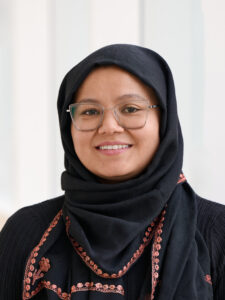
The development of new metal oxides and related functional materials for sustainable organic synthesis is the main research focus of Maqsuma Banoo, a graduate of the University of Jammu. She completed her PhD in Chemical Sciences at the Indian Institute of Science Education and Research (IISER) Mohali in India, where her research was devoted to the development of advanced materials for solar and mechanical energy harvesting.
She subsequently worked at Kyoto University, where she focused on the synthesis of novel heteroanionic materials and the study of structure–property relationships relevant to advanced energy and environmental applications.
Dr. Banoo is the author of several peer-reviewed publications in leading international journals and holds an Indian patent. Her scientific work has been recognized with three international and one national Best Poster Awards, as well as the prestigious CSIR International Travel Grant. In addition, she was awarded the highly competitive CSIR Junior and Senior Research Fellowships (JRF/SRF) by the Government of India for her doctoral studies.
Seung Yeop Yi
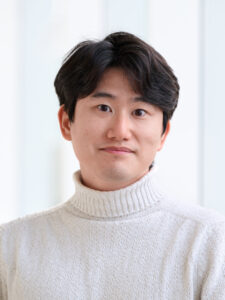
Seung Yeop Yi completed his master’s studies at Korea University and subsequently earned his Ph.D. in Chemical and Biomolecular Engineering from KAIST. His doctoral research focused on the rational design of electrocatalysts through geometric and electronic structure modulation for application in low-temperature energy conversion devices, including fuel cells and water electrolyzers.
His research covers carbon-based single-atom catalysts, metal and oxide nanostructures, and alloy systems. In addition to electrocatalysis, he has also contributed to the development of battery electrode materials and investigated single-atom-based nanozyme systems for cancer therapy and chemical sensing.
At Materials-Envi Lab (MEL), he designs and investigates novel catalytic architectures for a range of electrocatalytic reactions, with a particular focus on electronic structure tuning and interfacial environment engineering to improve reaction kinetics and material durability.