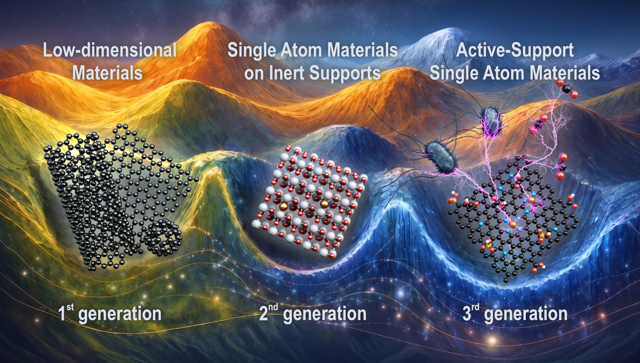


The CHEMATECH project, led by physical chemist Radek Zbořil from VŠB-Technical University of Ostrava, has secured funding in the highly prestigious EXPRO competition organized by the Czech Science Foundation. It will introduce a new approach to developing atom-scale materials for breakthrough technologies with applications in both industry and medicine. Its ambition is to pave the way for a new generation of nanotechnologies that will enable more energy-efficient chemical production, the conversion of carbon dioxide into valuable products, and more effective ways of combating antibiotic-resistant bacteria. The project has been awarded approximately CZK 50 million in funding.
Radek Zbořil, Scientific Director of the CEET Nanotechnology Centre and one of the country’s most highly cited researchers, is a pioneer in single-atom engineering. Although technologies that allow individual metal atoms to be anchored onto specially designed supports, thereby giving the resulting materials unique chemical and electronic properties, have advanced rapidly in recent years, several technological barriers still prevent their broader application in industry and biomedicine. The CHEMATECH project proposes a highly ambitious interdisciplinary strategy to overcome these limitations.
“Put simply, we aim to transform existing passive supports into chemically active participants in reactions. They will no longer serve merely as structures for anchoring metal atoms, but will actively participate in chemical reactions and biological processes. This could open the door to breakthrough technologies in sustainable chemistry, energy, and medicine,” explained Zbořil, the project’s principal investigator, outlining its central concept.
According to him, single-atom catalysts have already helped improve the yield and selectivity of numerous industrially important chemical reactions. In medicine, single-atom nanozymes, nanomaterials that mimic the activity of natural enzymes, have demonstrated the ability to destroy antibiotic-resistant bacteria.
“Nevertheless, current single-atom catalytic technologies still face several major challenges, including the high energy demands of certain processes, substantial waste generation, and reliance on expensive noble metals. In medicine, the practical application of single-atom materials is constrained by factors such as insufficient selectivity between bacterial and human cells and the risk of unwanted toxicity. These examples demonstrate the need to fundamentally rethink how single-atom systems are designed and to explore entirely new mechanisms of action. Our strategy will make it possible to precisely control the chemical and electronic properties of the supports, directly influencing the course of chemical reactions and biological processes. By actively engaging the support itself, we can achieve an unprecedented degree of control over the reaction environment at the level of individual atoms,” added Zbořil.
Over the next five years, his team will concentrate on chemical reactions that present major challenges for industrial applications. These include, for example, the production of amines, which serve as important building blocks in the manufacture of pharmaceuticals, agrochemicals, polymers, and many other products. Their industrial production, however, often requires high temperatures and pressures, as well as expensive catalysts.
“In the past, we succeeded in developing single-atom catalysts that enable amine production under considerably milder conditions. With CHEMATECH, however, we want to go a step further and explore entirely new reaction pathways that could eliminate the need for energy-intensive processes,” Zbořil explained, highlighting one of the project’s research directions. The researchers will also investigate the conversion of CO₂ into high-value chemicals and the development of new materials for antibacterial therapies.
From next year, the Czech Science Foundation will support 16 EXPRO projects selected from more than 200 applications. The competition aims to provide outstanding researchers with exceptional conditions for pursuing ambitious research proposals that have undergone a rigorous evaluation by international experts.